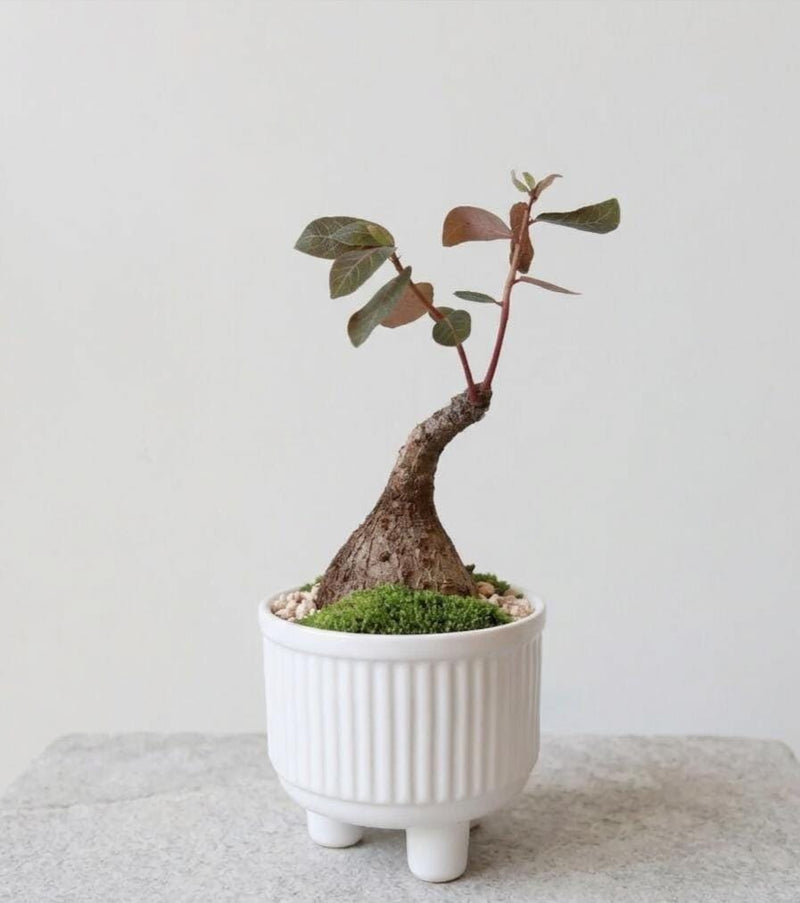
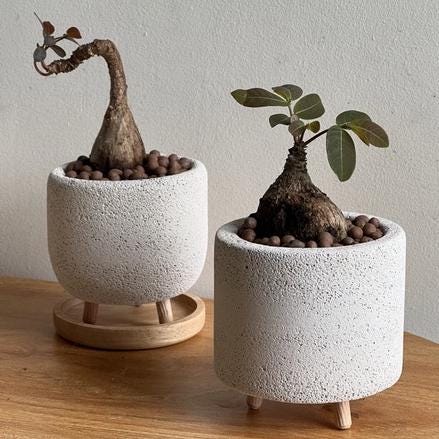
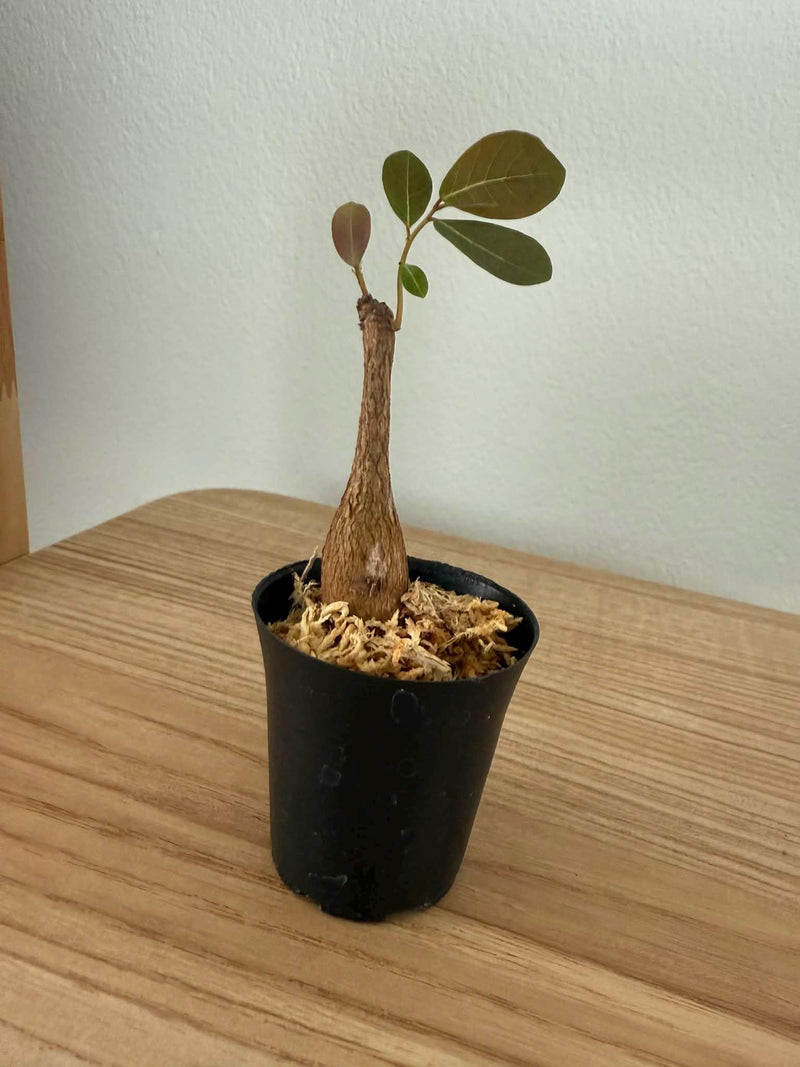
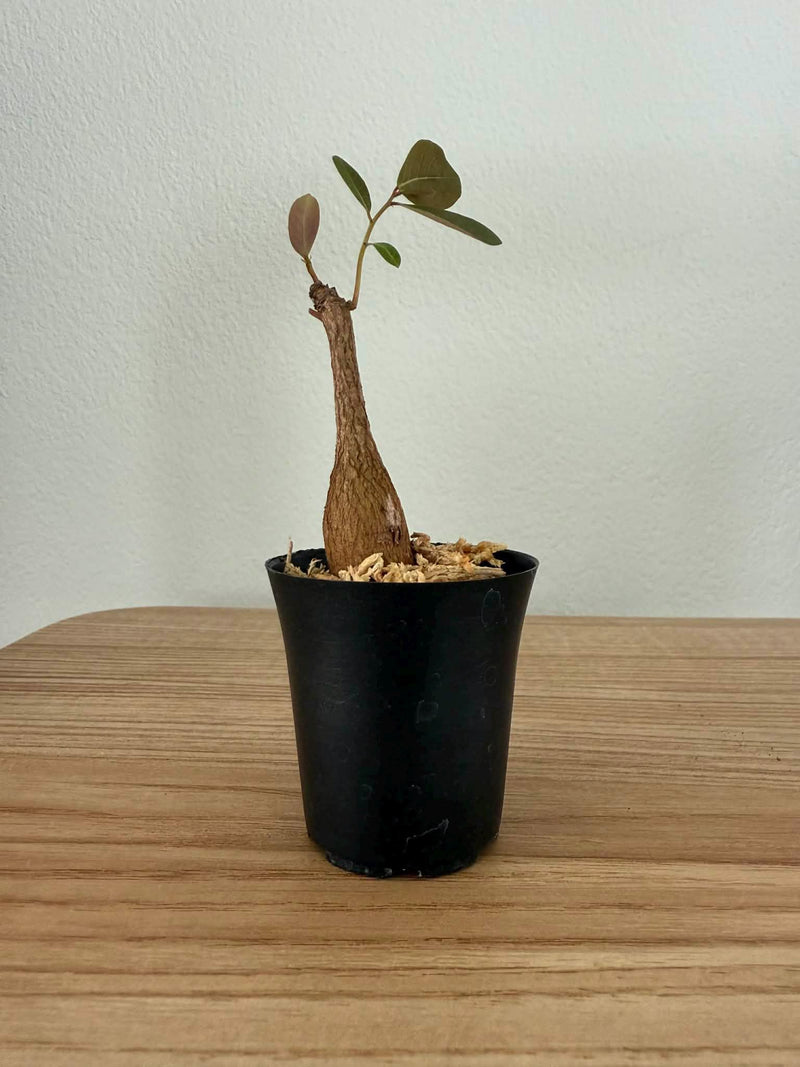
Phyllanthus Mirabilis Caudex Plant – Butterfly Buddha Belly Tuber (1.5" Pot)
$15.00
Phyllanthus mirabilis 1 Plant Butterfly Caudex Plant or Buddha Belly Plant
1 tuber, plant on photo , pot 1.5 "
Common Problems and Tips
• Dropping Leaves: This is a natural sign that the plant is entering dormancy in the fall. If it happens in summer, it may be a sign of drought or excessive stress (like being placed in full, harsh sun).
• Caudex Rot: Soft or mushy spots on the trunk are signs of rot, almost always caused by overwatering, particularly during dormancy.
• Leggy Growth: If the new vines are very long, thin, and have few leaves, the plant may not be receiving enough light.
1. Soil & Potting
Highly Porous Mix: Use a well-draining cactus or succulent soil. Adding extra perlite or pumice is highly recommended to prevent water retention.
Don't Bury the Caudex: Place the bulb (caudex) about 1/3 to 1/2 of the way into the soil. Leaving the top exposed prevents rot and lets you show off its unique texture.
2. Light & Air
Bright Indirect Light: They love bright spots but hate direct, scorching afternoon sun. Direct sun can burn the delicate leaves or even "cook" the bulb.
Airflow is Key: Good ventilation helps prevent fungal issues and helps the soil dry out between waterings.
3. Watering (The Critical Part)
Wait for Dry Soil: Only water when the soil is completely dry. Usually once every 4–7 days, depending on your environment.
Water the Soil, Not the Bulb: Try to pour water around the base. Water trapped in the deep crevices of the "corky" bark can lead to rot.
4. Dormancy Period
Don't Panic: This plant often goes dormant (loses all its leaves) during winter or very dry seasons.
Reduce Watering: When it's leafless, stop watering almost entirely. Only resume once you see a new green bud (growing tip) appearing.